Three layers of human work, and one that operates the machine.
The taxonomy as applied to 43,967 live specifications week ending 2 October 2026: 836 canonical skills, each in one of four layers.
Employers ask for the use of the model four times more often than they ask for the governance of it: AI tool use in 11,590 live specifications, AI governance in 3,137.
What is execution
Doing the defined work of the role. Technical: building, coding, configuring. Functional: the defined work of the role, done. Domain: the knowledge the work requires. 515 of 836 canonical skills sit in Execution.
What is coordination
Moving work between people and systems. Internal coordination: inside the organisation. External coordination: clients, partners, regulators. Enablement: making others able to do the work. Strategic alignment: connecting work to intent.
What is judgement
Deciding what the work should be, and whether it is right. Operational judgement: decisions inside the work. Strategic judgement: decisions about which work to do. Evaluative judgement: deciding whether the output is right, the sub-category a model most needs a human for. Taste: asked for by name in 1,341 live specifications.
What is AI-adjacent
Working with AI tools and systems. AI tool use: using them. AI tool building: making them. AI governance: deciding who is accountable for them.
How the layers relate to the mark
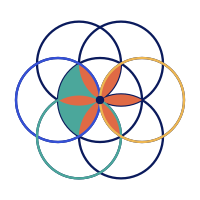
The mark carries the four layers as four shapes on one frame: execution the ring at 3, coordination the ring at 7, judgement the crossing at 9, and AI-adjacent the six leaves that meet at the record. Alone, each shape is the layer's glyph; together they are the mark. The map on the skills hub is the same four shapes, counted by the data.
The map, on the hubHow this is measured
Live basis. The counts here are specifications carrying at least one skill in the sub-category.
Full method at /method